Madrid Marathon 2026 — The Sixth Medal
Chaotic preparation, heavy legs from km 22, and 4h29 of effort — the Zurich Rock n Roll Marathon de Madrid will remain one of my most memorable races, far beyond any performance.
I don’t know how to begin this race report. Unforgettable is the only word that fits. Not for the time, not for an exemplary preparation — but for everything that happened between the starting gun and the finish line.
A Complicated Preparation
I have to be honest: I arrived in Madrid with no time goal. The preparation had been more than complicated, and pretending to aim for a specific time would have been lying to myself. The idea was simply to finish. To earn that sixth medal on the queen of distances.
I took the metro early that morning to reach my starting corral, scheduled for 8:30am. That left me enough time before the 9:05 start. I felt reasonably good, strangely calm — and I hadn’t quite grasped what was ahead of me. Yet this was already my sixth marathon.
The Start of the Zurich Rock n Roll Marathon
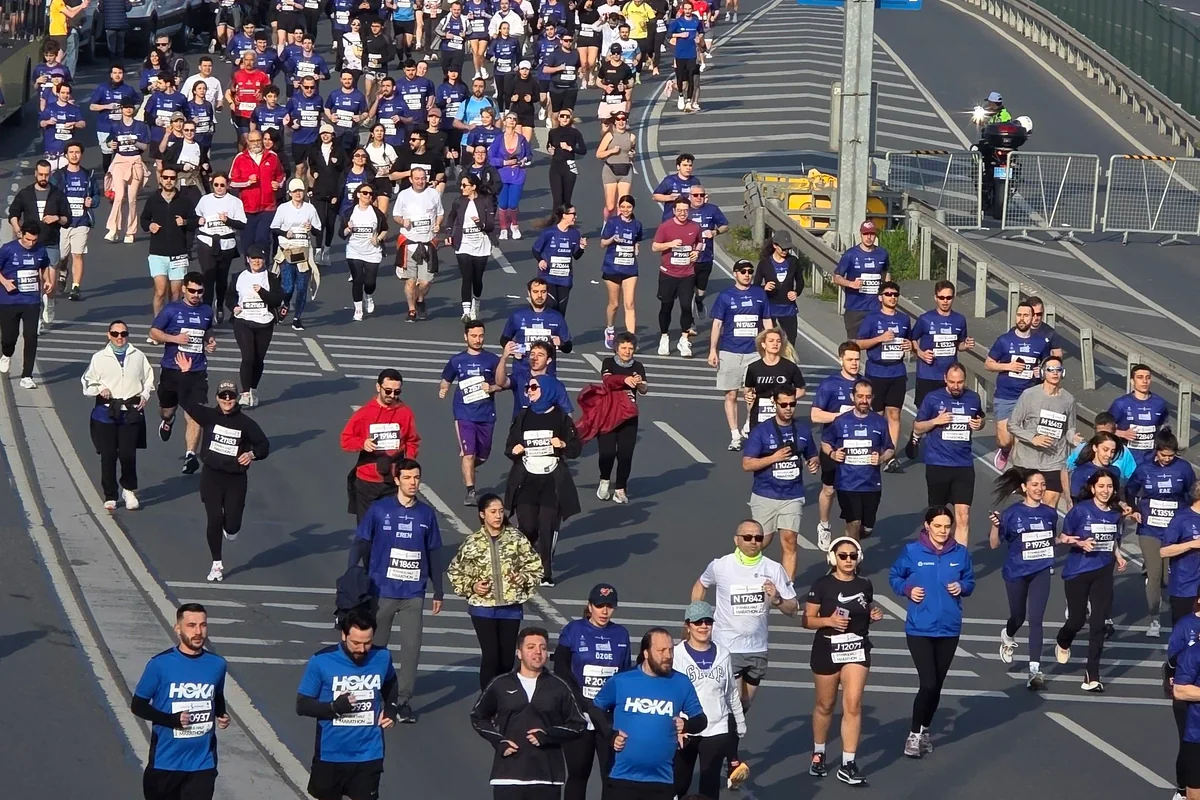
The atmosphere on the starting line was immediately electric. The Zurich Rock n Roll Marathon de Madrid doesn’t mess around on that front. The gun went off at 9:07 and the first thing I had to resist was the euphoria of the opening hundreds of metres.
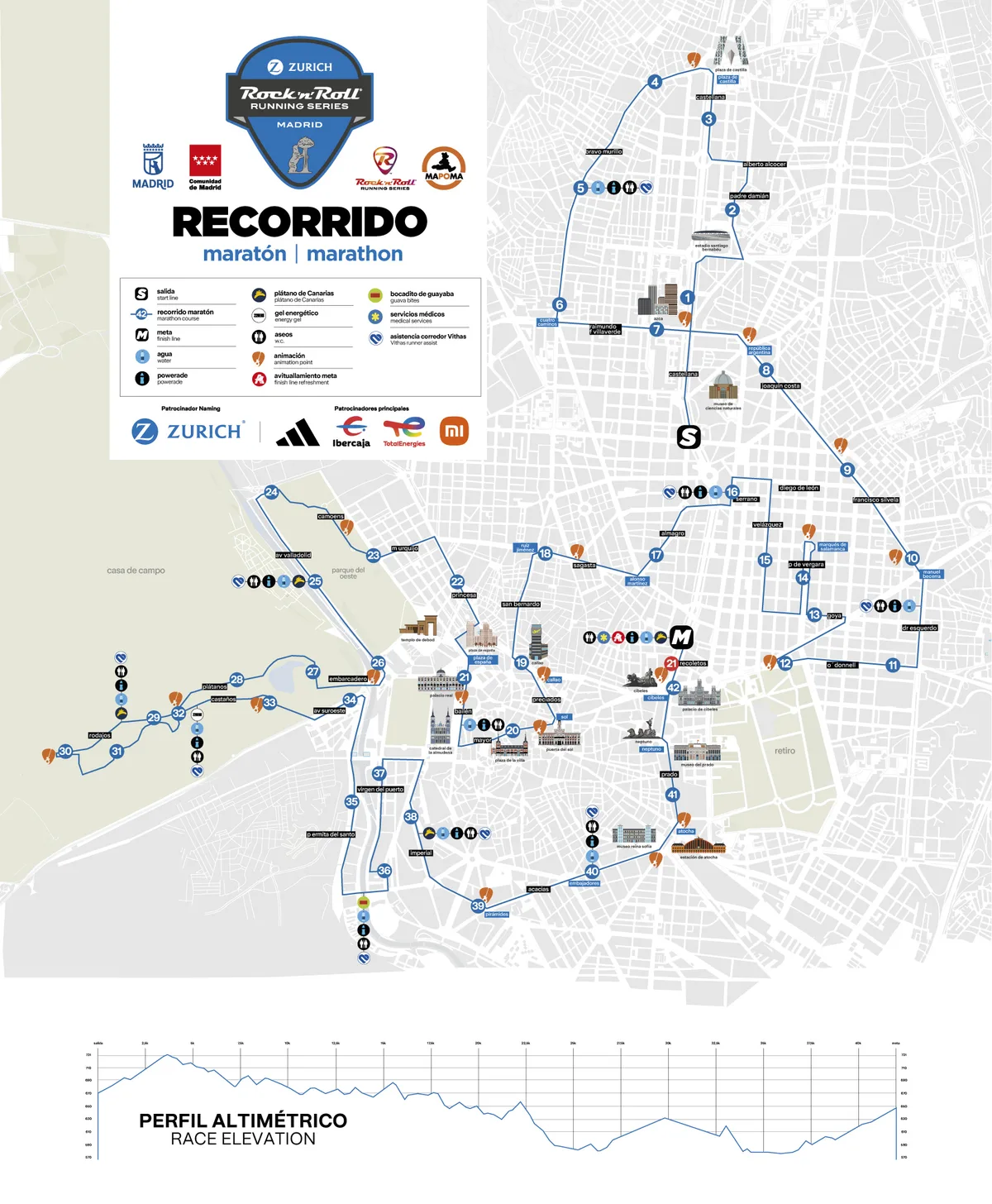
The first four kilometres are on a false uphill gradient. No sprinting allowed. I held the first two at 5’15/km without forcing, eased off in the next two, then made up time on the downhill sections that followed.
The Course
Tunnels, Hills and Descents: km 5 to km 27
From kilometre 5 to kilometre 27, the profile is broadly downhill — on paper. In reality, this stretch is riddled with tunnels and an almost endless series of climbs and descents that break your rhythm. You keep moving, but your legs are constantly working.
Just before kilometre 20 comes the split between half-marathon and marathon runners. The field thins out instantly. At that precise moment I knew the race was going to be very, very long.
My shoe choice that day — the Hoka Cielo X1 2.0 — would turn out to be a mistake I’d pay dearly for in the kilometres ahead.
The Turning Point at km 22
Barely past kilometre 22, my legs turned extremely heavy. It had been over 13 months since I’d run that kind of distance. The body remembers, in its own way.
A few kilometres later the race truly shifted. I knew I still had the crossing of Madrid’s two great parks ahead, then 4 kilometres of climbing before the finish. Aid stations became rest stops. Walk-run intervals settled in for most of the final kilometres.
The Inner Battle
My friends’ support and the cheers of the Madrileños clearly carried me — but the real battle was against myself. When every part of my body screamed to stop, I kept going. I never gave it the option to stop, let alone to abandon.
This race was my way of proving to myself that I was still capable. Of seeking out that famous pain cave that drives growth — the place where everything is decided mentally.
The Finish
Kilometre 42 appeared after more than 4h29 of effort. I finished with a slight acceleration into a sublime finish line — pure relief.
There’s no performance here, of course. But with a bit of hindsight, it’s pride above all that I feel. Earning that sixth medal on the marathon distance is far from a trivial thing.
Six marathons. Six finishes. One more in the collection.